
AIOBIO Blog
Making the invisible, visible. Fluorescence, biofilm and early change — explained for the operatory.
한국어 글 보기 →AIOBIO: Why Chairside Care Starts With What Patients See
Most of what changes in the mouth is hard to see — for the clinician, and even more so for the patient in the chair. This opening post launches the series, built on one idea: the moment the invisible becomes visible, treatment becomes care, and care leads to a healthy life.
Read →Qray Intraoral Camera Lineup: Which Device, When?
The four Qray devices share one principle — 405 nm fluorescence — but sit at different points in the workflow: Qraycam Pro for full-arch screening, Qraypen C for a close look at one tooth, Qrayview Pro to confirm biofilm removal, and Qscan Plus for home care between visits.
Read →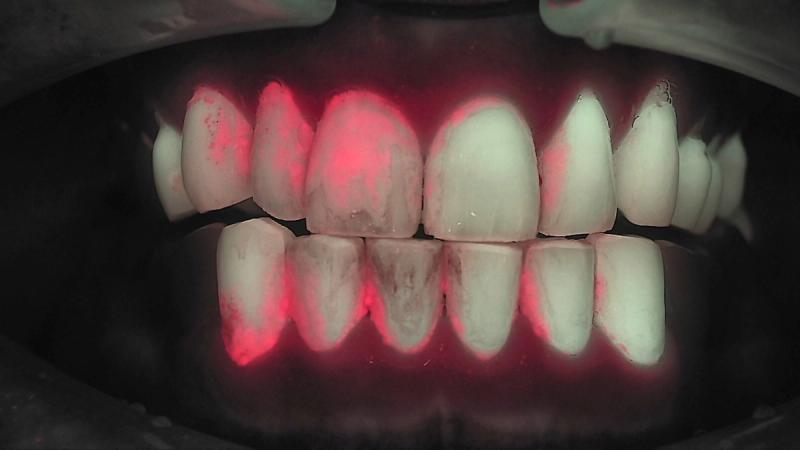
Quantitative Light-Induced Fluorescence: What 405 nm Shows
Quantitative light-induced fluorescence (QLF) uses 405 nm light to show two signals: green fluorescence from sound enamel and red fluorescence from bacterial porphyrins in biofilm that has matured for three days or more. QLF adds functional information to radiographs rather than replacing them.
Read →