
Cracked Tooth Consent: Tell Patients Before Symptoms Start
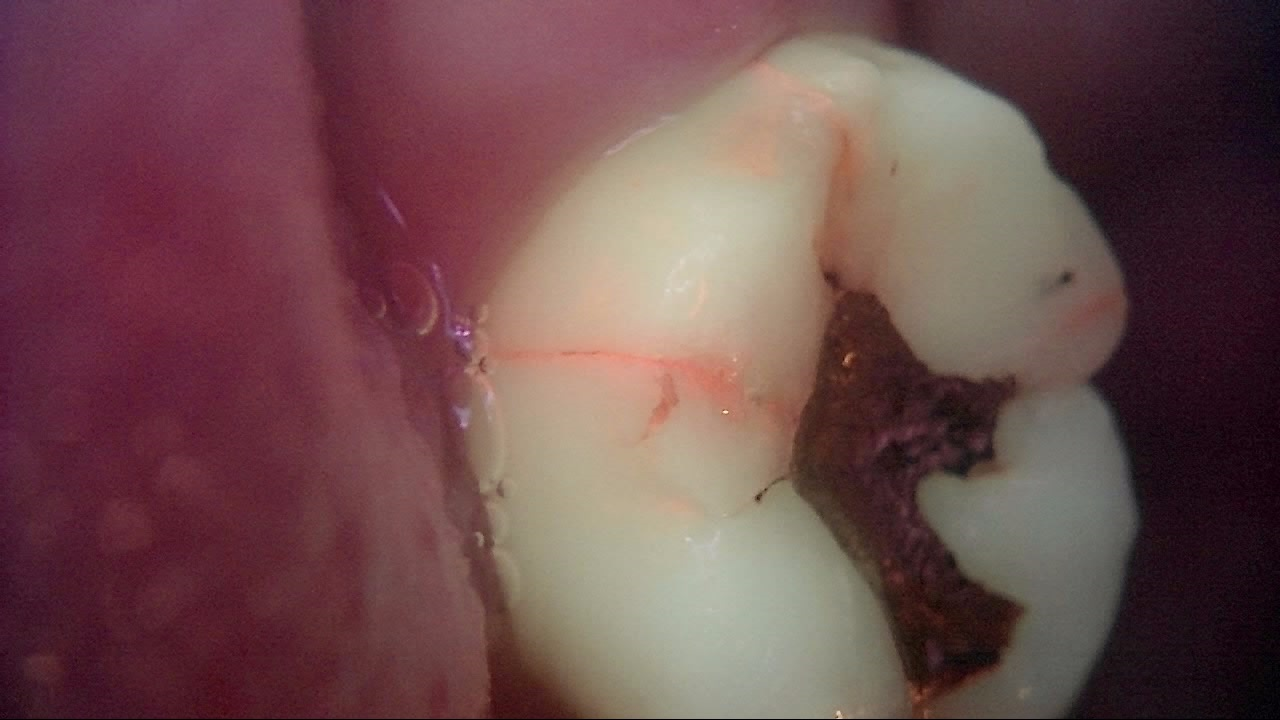
Cracked tooth consent usually comes up at the wrong moment. Explaining a crack to a patient who already has pain on biting is not hard. The hard case is the crack line you find at a routine recall in a patient with no symptoms. Say something and you seem to be creating worry. Say nothing and the fracture visit six months later begins with "why didn't you tell me." This article covers why asymptomatic cracks are worth disclosing, how to explain prognosis to patients, what a cracked tooth consent form should contain, and the options that do not involve immediate treatment. How to capture the crack line itself is covered in Cracked Tooth Imaging: Why We Capture Before, During and After Treatment.
Why disclose a crack that has no symptoms?
A crack disclosed in advance turns a fracture visit from an explanation into a confirmation. In one clinical account, a patient on a four-month recall had a buccal crack on a premolar pointed out at the most recent visit. The tooth fractured and the patient came back already understanding which tooth it was. In another, a palatal crack line explained a month earlier at a maintenance visit returned as an inlay margin fracture, caries was found beneath, and the patient agreed to a crown on the spot. A third patient was shown a crack in February, deferred treatment, developed pain in July and completed endodontic treatment and a restoration.
Disclosing a crack on the neighboring tooth works the same way. One clinician proposed a crown for a painful molar and, at the same time, showed the patient a crack in the restoration on the symptom-free adjacent tooth, which they agreed to watch. Less than a week after the crown was placed, the adjacent tooth fractured. Because the image had been reviewed together beforehand, the patient understood and moved straight to restoration. Without that image, the fracture could easily have been blamed on the treatment next door.
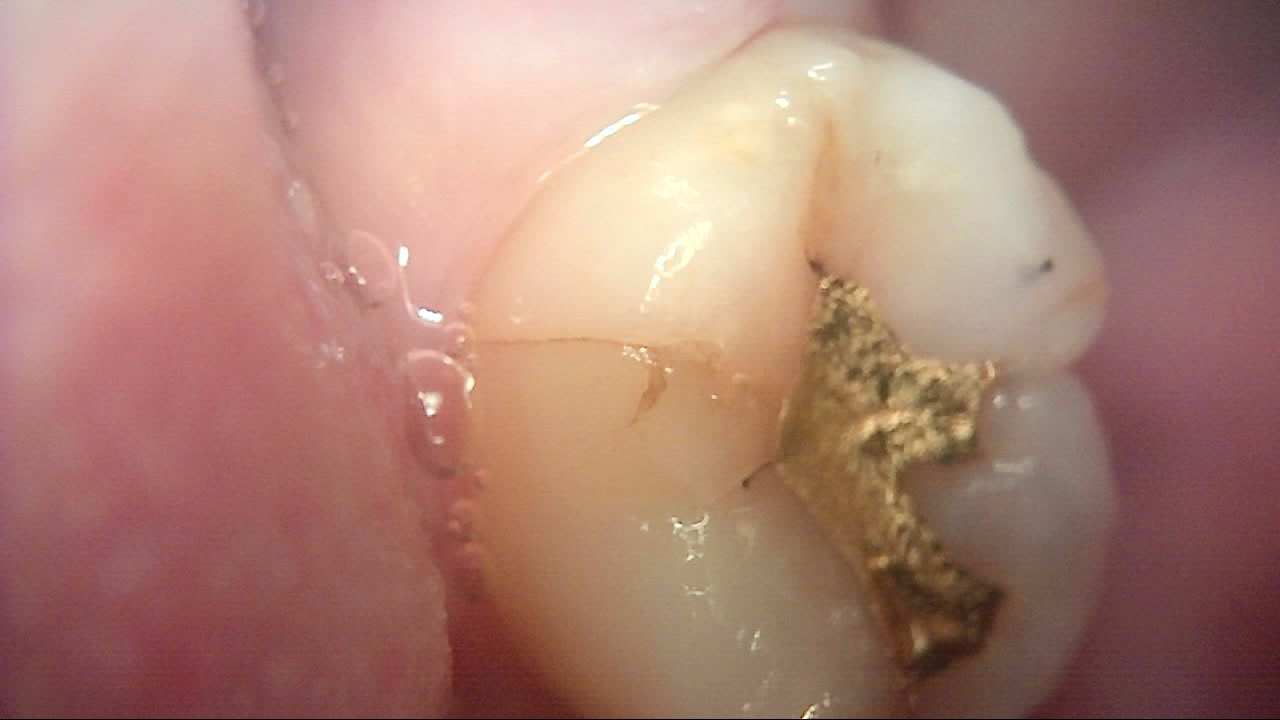
Cracks are hard to see, so showing is half the explanation. One clinical study imaged 90 teeth from patients diagnosed with cracked teeth and reported that 84 crack lines were observed as red fluorescence lines, with additional crack lines invisible to the naked eye found in some teeth. The authors concluded that QLF is an adjunctive tool for confirming cracked teeth. The diagnosis is made by the clinician with bite testing, percussion and radiographs.
Explaining prognosis to patients: what goes in the conversation
Prognosis splits by direction, depth and symptoms. In the AAE classification, a craze line has an excellent prognosis while a crack extending into the root and a vertical root fracture do not. Chairside, clinicians add that a mesiodistal crack tends to progress toward the root, whereas a buccolingual crack usually ends in cusp fracture or, if it reaches the root, becomes an extraction case with no middle stage. Deep pockets and inflammation can develop along the crack line, and a crack that keeps progressing under a crown worsens the prognosis. That is explained before treatment, not after.
Say at the start that finished may not mean finished. Among patients whose symptoms resolved after a composite restoration, some are fine ten years later and others relapse after three or four years and end up with a crown or endodontic treatment. Explaining the possibility of a crown and of endodontics before the composite is placed is what lets the patient follow the next, less conservative step without confusion. In one published case, the crack looked fully removed after crown preparation to the naked eye, yet the Qray fluorescence image still showed a residual crack line, so the patient was told pain might not disappear completely after the restoration.
| Item | What we see today | What may happen | Options and next check |
|---|---|---|---|
| Location and direction | Crack line on occlusal, buccal and palatal views, red fluorescence or not | May stay within the crown or progress toward the root | Observe / adjust occlusion / restore, re-image at the same angle next recall |
| Symptoms | None / pain on biting / cold sensitivity | Symptoms may appear or change | Return before the recall if discomfort starts |
| Treatment stage | What is recommended now | Possible path: composite → crown → endodontics → extraction | Pros and cons of each step, recorded in the consent form |
| After restoration | Condition of the restoration | Residual crack may leave some pain, a pocket may form along the line | Check margin and occlusion at each recall |
What belongs in a cracked tooth consent form
Many practices use a separate consent form for cracked teeth. The contents are broadly similar: the tooth and location of the crack, the possibility of extraction and of a poor prognosis, the possibility that treatment moves from composite to crown to endodontics, the possibility of symptoms after restoration, and the patient's signature confirming an informed choice. One clinician who shared their form advised colleagues to revise any wording that might be problematic for their own setting. Forms differ by practice, so use the items as a checklist and write your own.
A form with images shortens the explanation. Placing the white light and Qray fluorescence images side by side on the form lets the conversation begin with "this is the line." The images stay with the consent form and the chart, and become the record of the tooth's condition when the fracture visit comes. A consent form is not a liability shield. It is the record that the patient understood the likely course of their tooth and made a choice.
Options that are not immediate treatment: observation, occlusal adjustment, night guard
An asymptomatic crack confined to the crown does not have to go straight to a crown. Several practices mark the crack area with articulating paper, remove lateral interferences, provide a hard night guard for bruxism or clenching, and decide on a crown afterward. Even with symptoms, a crack that has not extended below the crown often becomes comfortable with occlusal adjustment alone. For a crack running under an inlay, the inlay is removed and the finding decides: a crown if it reaches the root, occlusal adjustment and a night guard if it does not.
Showing the image lowers resistance to occlusal adjustment. Recommending bruxism or clenching management to a patient with no symptoms is a hard sell. Showing the crack line together with wear on the opposite side changes the conversation. In one account, a patient who came in with a fractured molar was shown the wear on the opposite molars, understood that the occlusal problem was bilateral, and agreed to botulinum toxin treatment. Occlusion can then be checked at every visit as the plan progresses.
There are reasons to stay conservative. Experienced clinicians say that treating a crack with ambiguous symptoms succeeds in 99 patients and the one failure is what keeps them up at night. When a new patient shows cracks on several teeth, one option is not to start treatment at all, but to explain that treatment begins the moment anything feels worse than today. Proactive care does not mean treating early. It means leaving a baseline, explaining the change, and agreeing on the next check.
A chairside order: show, explain, preview
- Show. Put the white light and Qray fluorescence images side by side and point to the line. "No symptoms today, but this line is here."
- Explain. How prognosis changes with direction, depth and symptoms, and the options available now.
- Preview. What it looks like if it progresses, how treatment changes at that point, and when the next check will be.
- Record the images, the explanation and the choice in the consent form and chart, and re-image at the same angle at the next recall.
Leave fear out of it. Not "if you ignore this it will be a disaster" but "this is where it is now, and if this change appears we will do this." Respect the patient's questions and choice, and do not press for a decision.
What's next
The crack line captured at a recall is stored in LINKDENS, placed beside the same-angle image at the next visit, and delivered to the patient as a report. For the practice owner, disclosing a crack early is not defensive dentistry. It turns one observation into a commitment for the next visit. When the patient returns with pain or a fracture and the conversation begins with "this is the line we looked at," treatment decisions move faster. It does not guarantee a return visit or case acceptance, but the conversation with a patient who has a record is plainly different from one without. When that record feeds continuous care through QBLISScare, a crack stops being a sudden event and becomes a change the two of you were watching together.
FAQ
Q. How do you explain cracked tooth prognosis to a patient?
A. With the image on screen: prognosis depends on direction, depth and symptoms, and can change if the crack keeps progressing even after treatment. The possible path from composite to crown to endodontics is explained once, before treatment.
Q. Is a separate cracked tooth consent form necessary?
A. It is a practice choice rather than a legal requirement, but many practices use one that covers extraction risk, prognosis and the possibility of moving between treatment stages. Attaching the images combines explanation and record in one document.
Q. Should an asymptomatic crack be treated?
A. There is no single answer. A symptom-free crack within the crown can be managed first with occlusal adjustment, a night guard and observation, with a next check agreed. A crack progressing toward the root, or one that becomes symptomatic, is decided by the clinician with other tests.
References
- Lee JI, Jeon MJ, de Josselin de Jong E, et al. Evaluation of the clinical efficacy of quantitative light-induced fluorescence technology in diagnosing cracked teeth. Photodiagnosis Photodyn Ther. 2023;41:103299. DOI