
Plaque Disclosing Agent vs Fluorescence for Kids' Brushing
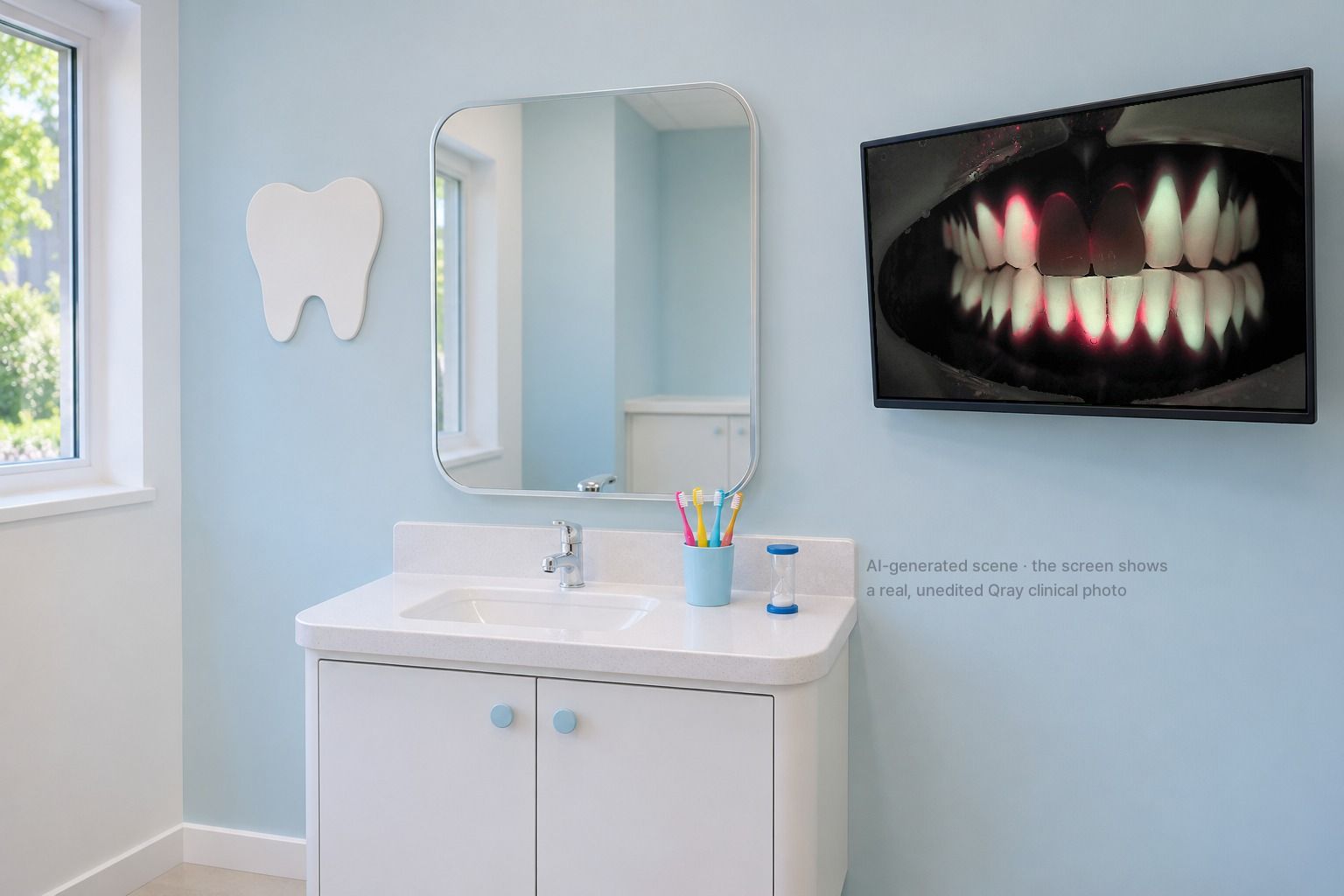
Plaque disclosing agents have been part of children's oral hygiene instruction for decades, and for good reason. Paint a seven-year-old's teeth, hand over a mirror, and the pink stain does the teaching. But some days the dye ends up on the lips and tongue right before school pickup, and some parents look at the color and start scolding. This article compares disclosing tablets and solutions with fluorescence plaque imaging and suggests when each one fits in a pediatric hygiene visit.
How do disclosing agents and Qray fluorescence differ?
Both make invisible plaque visible, but they do it differently and highlight different plaque.
| Comparison | Disclosing agent | Qray fluorescence image |
|---|---|---|
| How it shows plaque | Dye colors the plaque, visible immediately | No dye, seen in a fluorescence image |
| What it mostly highlights | Plaque broadly, from fresh to older | Plaque that has been in place for a while, in red |
| What children like | Instant and intuitive in a hand mirror | No stained lips or tongue, and the image becomes a record |
| What to watch for | Color on lips, tongue and clothes, and time to clean up | Very fresh, thin plaque may not appear red |
| Comparing at the next visit | Needs a separate photo to keep | Same-angle images are easy to place side by side |
The strength of a disclosing agent is immediacy. It colors plaque on the spot, so children and parents understand without much explanation. The long-standing drawbacks are cleanup and families who dislike leaving with stained lips.
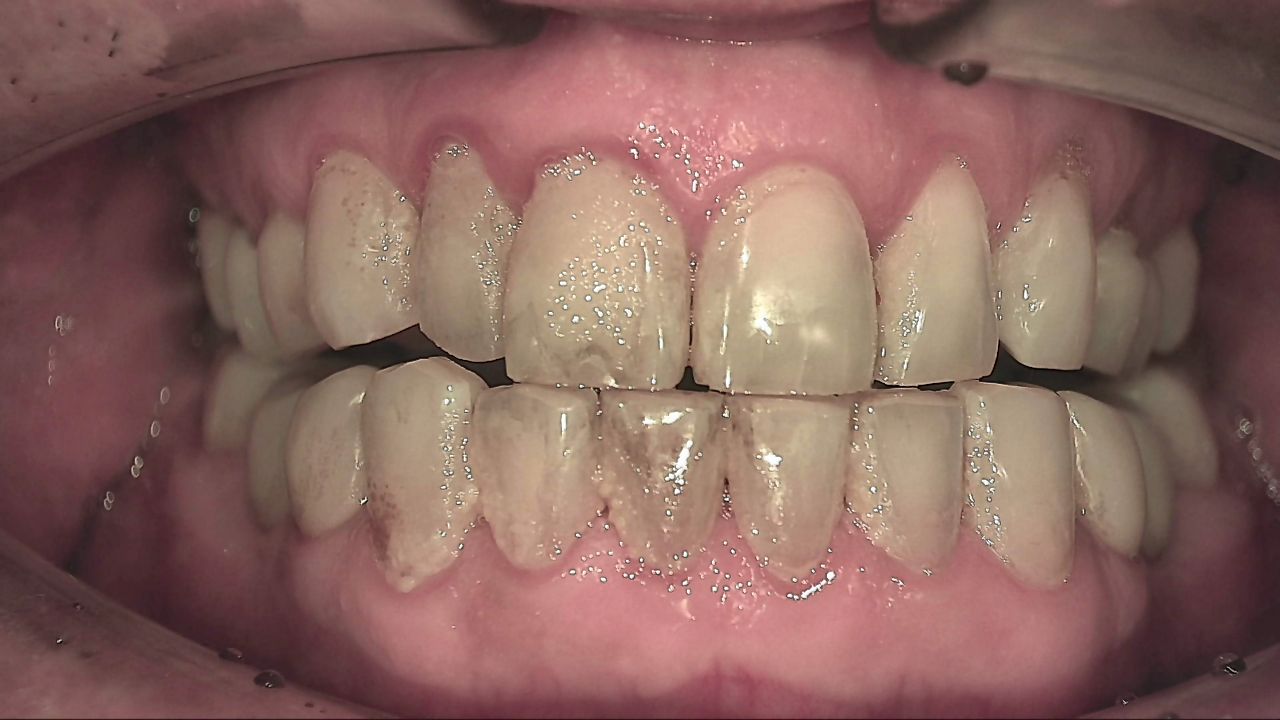
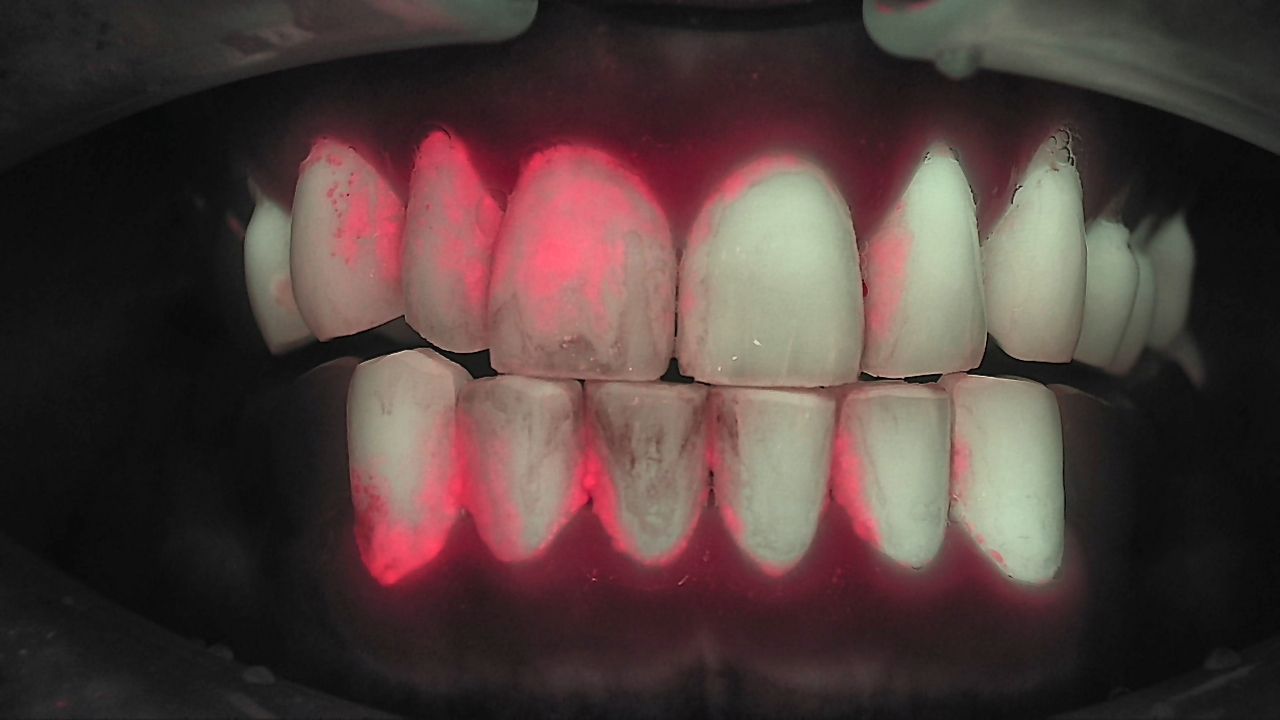
Qray fluorescence shows plaque without staining. Porphyrins produced by bacteria in plaque glow red under 405 nm light, so plaque can be captured in an image with no dye. One dentist described using Qray images to show patients the plaque left behind even after they had brushed before the appointment, and found it a practical option when disclosing agents were hard to use.
What does research say about disclosing agents and red fluorescence?
One clinical study examined 600 anterior tooth surfaces in 50 people with fluorescence imaging and a two-tone disclosing agent. The same teeth were imaged with fluorescence before disclosing, and the result was compared with the stained areas afterward. The red-fluorescent plaque area was similar to the area stained in the color that marks older plaque, and differed from the area stained as newer plaque. The authors concluded that fluorescence imaging has potential for detecting mature plaque.
Another clinical study compared an automated plaque index from fluorescence images of 69 people with indices scored from disclosed plaque. The fluorescence index correlated positively with the disclosing-based scores, and more strongly with the score based on the older-plaque stain. The authors concluded it can grade plaque levels and help distinguish old, mature plaque.
Both studies used research equipment and analysis methods. A chairside Qray fluorescence image works on the same principle to show established plaque. It is more accurate to think of it as showing a different target than as replacing the disclosing agent.
When should you use which with children?
Splitting the question makes the choice easier: where was it missed today, and where does it keep getting missed?
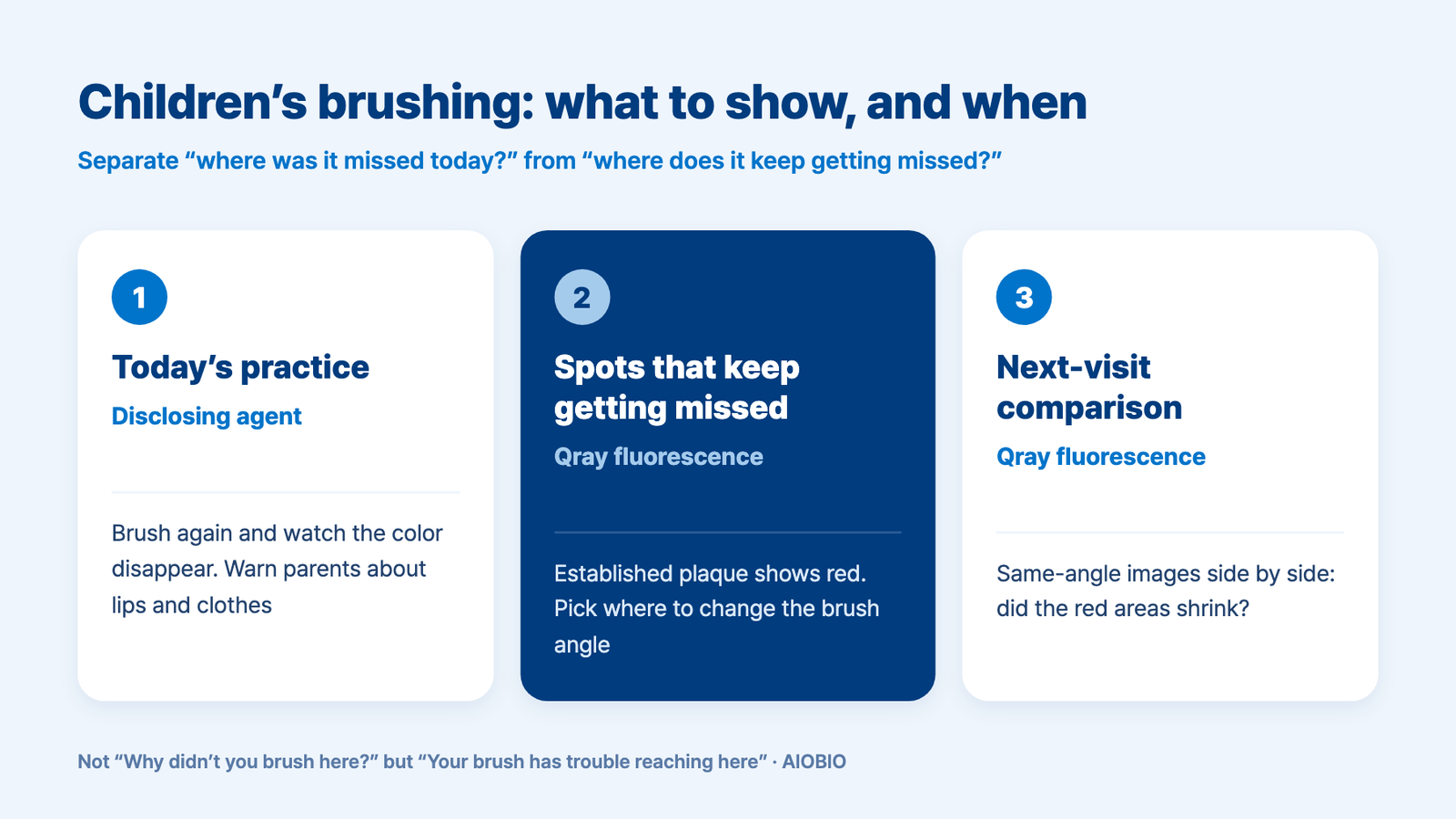
- Today's brushing practice: for a child learning to hold a brush, where you want them to brush again and watch the color disappear, a disclosing agent is the most intuitive. Warn parents ahead of time about lips and clothes.
- Spots that keep getting missed: when you want to show where the same areas are missed again and again, and where plaque has been sitting for days, a Qray fluorescence image fits better. Red areas are more likely to be spots the brush has been missing for a while than spots missed only today, which makes them good targets for changing the brush angle.
- Comparing at the next visit: keep a same-angle fluorescence image, and at the next appointment you and the child can see side by side whether the red areas shrank.
When you show red fluorescence, start with words that do not blame the child. Red fluorescence mainly comes from plaque that has had time to settle, not from what the child just ate. So instead of "Why didn't you brush here?" try "This is a spot your brush has trouble reaching. Let's start here from today." With parents, narrow it down: "Your child is brushing, but there are two spots the brush has a hard time reaching. Could you help with just these two?"
What's next
Children's brushing instruction gains its power at the next visit, not in a single demonstration. The fluorescence images you take today are stored in LINKDENS and sent to the parent as a report, and at the next appointment they sit side by side with new images from the same angle so the family can see whether the red areas shrank. No image guarantees a return visit, but a child seeing their own progress is how a hygiene lesson becomes ongoing care, and how a practice moves from Reactive to Proactive.
FAQ
Q. Do I have to choose between a disclosing agent and fluorescence?
A. No. A disclosing agent suits on-the-spot brushing practice, and fluorescence images suit finding spots that keep getting missed and comparing at the next visit. Depending on the child's age, the situation and the parent's preference, you can use both or split them.
Q. Does fluorescence miss fresh plaque?
A. Very fresh, thin plaque may not appear red. Red fluorescence mainly comes from plaque that has been in place for a while, so fluorescence images are better at showing persistent problem areas.
Q. Will red fluorescence frighten young children?
A. If you describe the color as "where the brush didn't reach" rather than as a danger signal, most children treat it like a game. Showing a smaller red area at the next visit gives them a sense that they did it themselves.
References
- Han SY, Kim BR, Ko HY, et al. Assessing the use of Quantitative Light-induced Fluorescence-Digital as a clinical plaque assessment. Photodiagnosis Photodyn Ther. 2016;13:34-39. DOI
- Park SW, Kahharova D, Lee JY, et al. Clinical assessment of an automated fluorescent plaque index scoring with quantitative light-induced fluorescence. Photodiagnosis Photodyn Ther. 2020;32:102011. DOI