
Perio & Implants
Plaque, biofilm, scaling and implant maintenance — made visible with fluorescence.
한국어 글 보기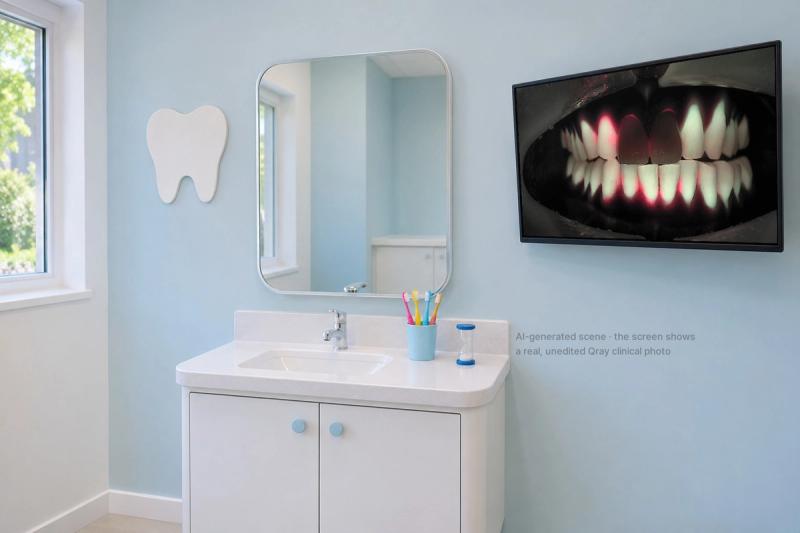
Plaque Disclosing Agent vs Fluorescence for Kids' Brushing
A plaque disclosing agent stains plaque on the spot, while Qray fluorescence shows established plaque without dye. How they differ, what studies comparing them found, and when to use each in children's brushing instruction.
Read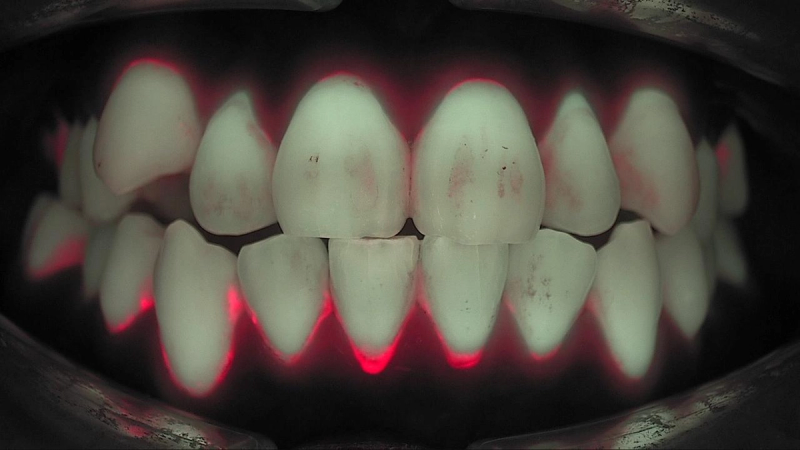
Red Biofilm Care Protocol: Screen, Clean, Diagnose Precisely
The Red Biofilm Care protocol is a five-step single-visit workflow. What screening, hygiene evaluation, biofilm removal, re-evaluation and precise reading each do, why the tooth is read only after the biofilm is gone, and how hygienist and dentist split the steps.
Read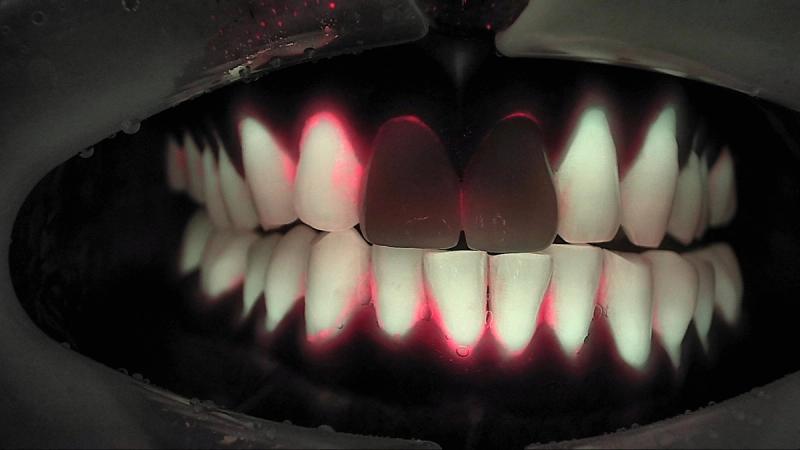
Plaque Before and After Scaling: Show the Red Disappear
Capture one Qray fluorescence image before scaling and one after, and patients see the red along the margins reduced. Why the before image matters, how to turn remaining red into a visible target, and a five-step chairside order, with two real cases.
Read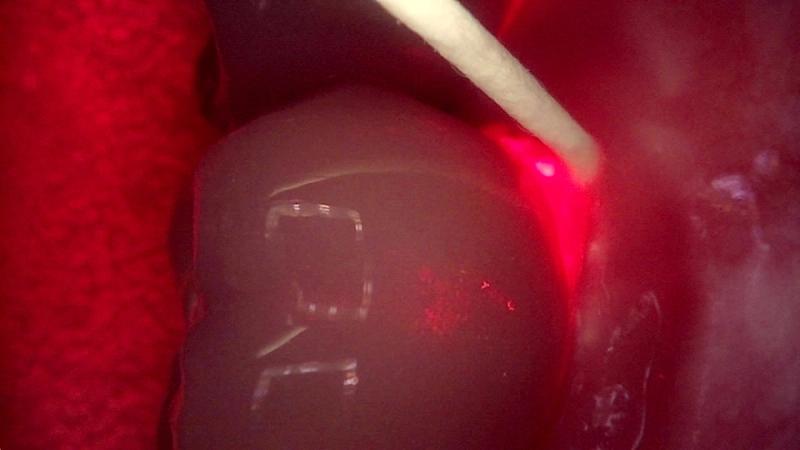
Peri-implantitis Doesn't Hurt: Seeing Peri-Implant Biofilm for Lifelong Implant Maintenance
Peri-implantitis often progresses without pain. Here is what mature peri-implant biofilm looks like under 405 nm fluorescence, and how baseline images, re-imaging and recall turn that view into an implant maintenance routine.
ReadDental Plaque Fluorescence: Why Mature Biofilm Glows Red
Dental plaque fluorescence is red because mature biofilm bacteria make porphyrins that glow under 405 nm light. In a lab model, red appeared at about day three and rose with bacterial load and demineralization. Here is how to read what the eye and the bitewing cannot show.
Read